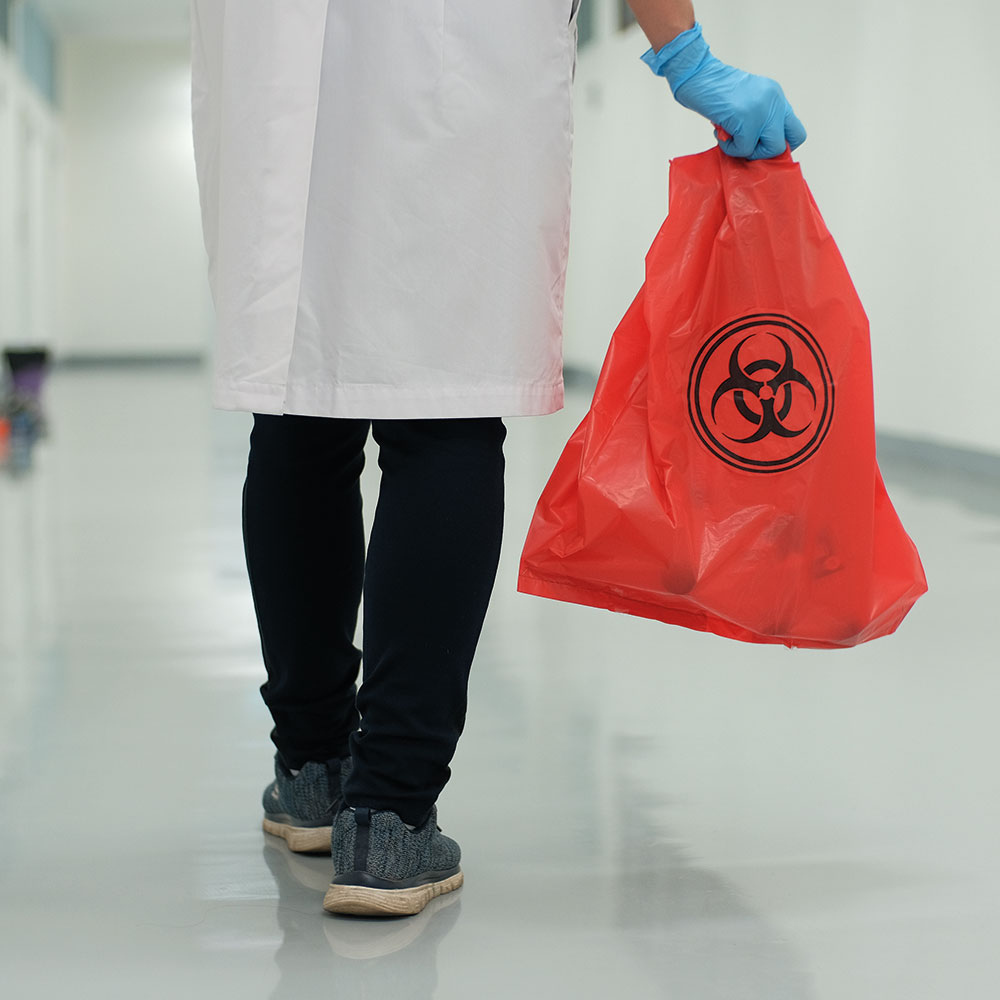
The management of medical waste is regulated by Presidential Decree 254/03, published in the Official Gazette on 15 July 2003. This decree also regulates the management of infectious medical waste. There are different types of medical waste:
Non-hazardous medical waste is all waste that does not have hazardous characteristics and is generated by healthcare facilities. This can be all waste from non-infectious material such as paper (empty medicine and medical instrument packaging), plastic (medical instrument casings, bottles, detergents, sanitisers), glass and cans (bottles and flasks containing non-infectious material). But also disposable clothing and towels that have not come into contact with infectious elements (e.g. towels used to cover beds in doctors’ surgeries), paper, orthopaedic casts, uncontaminated nappies. Such waste must be stored in compliance with the regulations and must be recovered by waste collection companies.
All waste is classified by codes according to the European Waste List. Those regarded as ‘special hazardous waste’ are marked with an asterisk *.

Hazardous medical waste at risk of infection is waste contaminated with biological fluids such as blood and various secretions, or waste from environments and patients in infectious isolation: gauze, gloves, cannulae, drains, catheters, intravenous drips, masks, waste contaminated with infected faeces and urine, such as nappies, but also sharps waste such as needles, blades and syringes.

The entire health sector (hospitals, ATS, ASL, nursing homes, doctors’ offices, outpatient clinics, etc.) produces large quantities of special waste on a daily basis, most of it hazardous. Such waste must be collected and stored following specific procedures, using special bags and containers, in compliance with the safety measures provided for by the law, and placed in special places for subsequent collection, which must take place within a certain time frame.